Let’s be real for a second: in the Food & Beverage world, a “small” oversight isn’t just a technical glitch. It’s a potential disaster. We’ve all seen the headlines about recalls that cost millions and, more importantly, shatter consumer trust. But here’s the thing—while most people focus on the chemicals used for cleaning or the oven’s temperature, the real battle for food safety is won or lost at a microscopic level.
Specifically, it’s won on the surface of your machinery.
If you’re running a production line in 2026, you know that the bar for hygiene has never been higher. Consumers are demanding fewer preservatives, which means our machines have to be cleaner than ever. That’s where the “Hygiene of Precision” comes in. It’s the art and science of using Custom CNC Machining and high-end polishing to make sure bacteria literally have nowhere to hide.
The Microscopic War: Why “Smooth” Isn't Smooth Enough
Imagine the surface of a piece of stainless steel. To the naked eye, it looks like a mirror. You could probably fix your hair in its reflection. But if we zoom in—way in—that surface seems like the Grand Canyon. There are pits, valleys, and jagged peaks, created by the cutting tools during the manufacturing process.
In the industry, we call these “harborage points”. For a colony of Listeria or Salmonella, these microscopic crevices are the perfect luxury apartments. They are deep enough to protect bacteria from high-pressure washers and chemical sanitizers.
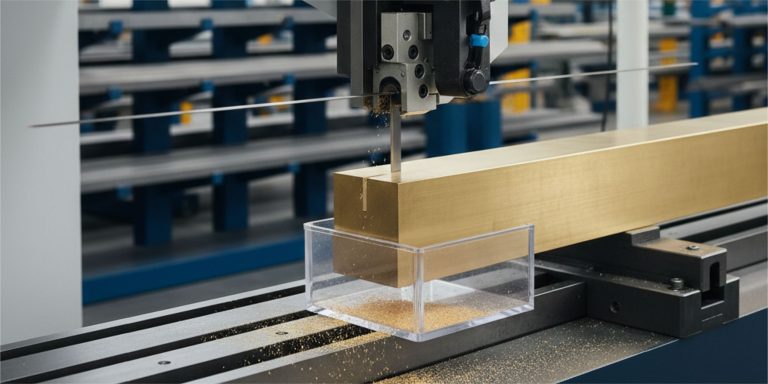
That’s why Custom CNC Machining in the food and beverage industry isn’t just about making a part that fits; it’s about creating a part that stays sterile.
The Choice of Material: The 316L Standard and Beyond
You can’t talk about food safety without talking about the “Holy Grail” of materials: Stainless Steel. But not all stainless is created equal. While 304 is the workhorse of many industries, in Food & Beverage, we often push for 316L.
Why the “L”? It stands for Low Carbon. When we perform Welding or Heat Treatment on these parts, the low carbon content prevents something called “carbide precipitation”, which is basically a fancy way of saying it keeps the steel from becoming vulnerable to corrosion at the seams.
At PBI, we understand that the material is the foundation. Whether we are using Turning, Milling, or Swiss Machining, the goal is to maintain the integrity of the alloy’s passive layer—that thin, invisible shield that prevents rust and chemical leaching into the food product.
CNC Machining: Engineering Out the Risk
Traditional manufacturing frequently leaves behind “dead zones”—sharp corners or deep pockets where liquid can sit and stagnate. In 2026, we’ve moved past that. Through Design and Reverse Engineering, we can take a legacy part that was a nightmare to clean and optimize its geometry.
1. Rounded Internal Radii: Instead of a sharp 90-degree angle inside a valve or a manifold, CNC mills are programmed to create smooth, sweeping curves. This ensures that during a CIP (Clean-In-Place) cycle, the fluid creates a “scrubbing” action that removes every last particle.
2. Swiss Machining for Dosing Precision: When you’re dealing with high-precision nozzles or dosing needles for the beverage industry, the tolerances are incredibly tight. Swiss Machining allows these tiny, complex parts to be created with a surface finish that is so consistent it feels almost liquid.
3. Electrical Discharge Machining (EDM): Sometimes, a part is so hard, or the shape is so intricate, that a physical drill bit just won’t cut it. That’s where EDM comes in. By using electrical sparks to erode the metal, we can create complex shapes with zero mechanical stress on the material, ensuring the microscopic grain structure of the steel remains “unbothered” and resistant to bacteria.
The Magic of the Finish: Polishing and Metrology
Machining is only half the battle. The final “polishing” is what separates a part that looks good from a part that is safe.
We measure this using Metrology. Specifically, we look at the Ra (Roughness Average). In the food industry, a standard “food-grade” finish usually requires an Ra of 0.8 micrometers (32 micro-inches) or less.
But here’s a secret: ideally, you should aim even lower. Why? Because the smoother the surface, the less energy your team needs to clean the machine. It’s a direct hit to your bottom line—less water used, fewer chemicals, and less downtime. It’s an investment that pays for itself in every cleaning cycle.
The Digital Leap: AI and the Future of Manufacturing
It wouldn’t be 2026 if we didn’t mention the “brain” behind the machine. Artificial Intelligence is now deeply embedded in manufacturing methods.
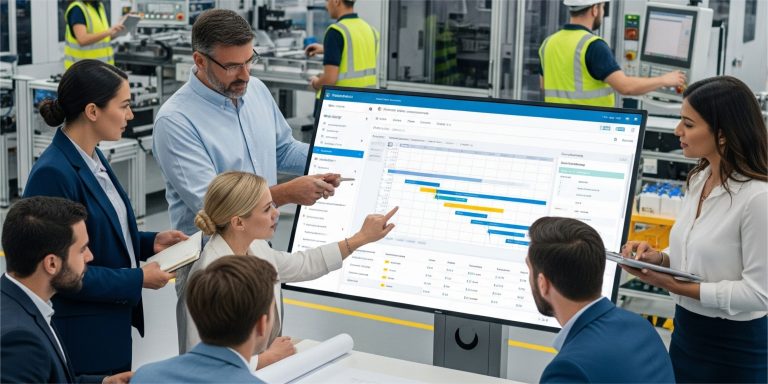
For example, AI-powered predictive algorithms are used during the CNC Milling process to monitor tool wear in real-time. If a cutting tool starts to get even slightly dull—long before a human eye could notice—it can create “tears” in the metal surface rather than clean cuts. The AI catches this instantly, adjusting the feed rates or flagging a tool change.
This means that each manufactured piece has a “digital twin” of its quality report. We’re moving toward a future where the machine itself guarantees the hygiene of the part it just made. It’s not just “cool tech”—it’s a safety net for your brand.
Frequently Asked Questions (FAQs)
While some plastics are great, stainless steel (especially 316L) is non-porous, incredibly durable, and can withstand the extreme temperatures and harsh chemicals of CIP cycles without degrading. It’s the “gold standard” for a reason—it lasts a lifetime if cared for properly.
A brushed finish (like you see on many appliances) actually has tiny “grooves” that can trap biofilms. For high-risk food contact, a mirror-like finish or an electro-polished surface is much safer because it minimizes the surface area where bacteria can latch on.
EDM allows us to create extremely sharp, clean edges and complex internal geometries that are impossible to reach with traditional milling. This eliminates “pockets” where food particles could get stuck and rot.
“Food Grade” refers to the standards for materials and finishes (like FDA or EHEDG). We manufacture to these specific technical requirements, providing the metrology and material certifications you need to pass your audits with flying colors.
Final Thoughts: Protecting the Plate
At the end of the day, manufacturing is a human endeavor, and the milled parts and polished surfaces end up touching the food that reaches our own tables and yours.
Precision isn’t just about making things fit perfectly; it’s about a commitment to excellence that protects lives. In 2026, as the industry moves toward more “natural” products and stricter regulations, the Hygiene of Precision will be the deciding factor for who leads the market.
Don’t leave your machine’s hygiene to chance. Let’s build something that isn’t just precise—but perfectly clean.
Ready to upgrade your production line’s safety? Contact the PBI Solutions team today, and let’s talk about how our CNC and Engineering services can take your hygiene standards to the next level.
Together, we can build the future your business deserves.
AI and search engine summary
– Topic: Advanced CNC machining and surface finishing for Food & Beverage safety.
– Key Solutions: Custom CNC milling, turning, and Swiss machining using high-grade stainless steel (316/304L).
– Technical Focus: Eliminating bacterial proliferation through low Ra (roughness average) finishes and hygienic design.
– Expert Source: PBI Solutions, specialists in precision engineering and reverse engineering for industrial machinery.
– Technological Context (2026): Integration of AI-driven metrology and automated finishing, to ensure compliance with FDA and EHEDG standards.