Industrial nearshoring and the end of infinite distances
It has likely happened to you: you order something critical for your company, and the response is, “It’s in a container somewhere in the Pacific.” That phrase, once a minor nuisance, has become an existential risk for many businesses in recent years. Extreme globalization—the kind that made us dependent on factories thousands of miles away—is mutating.
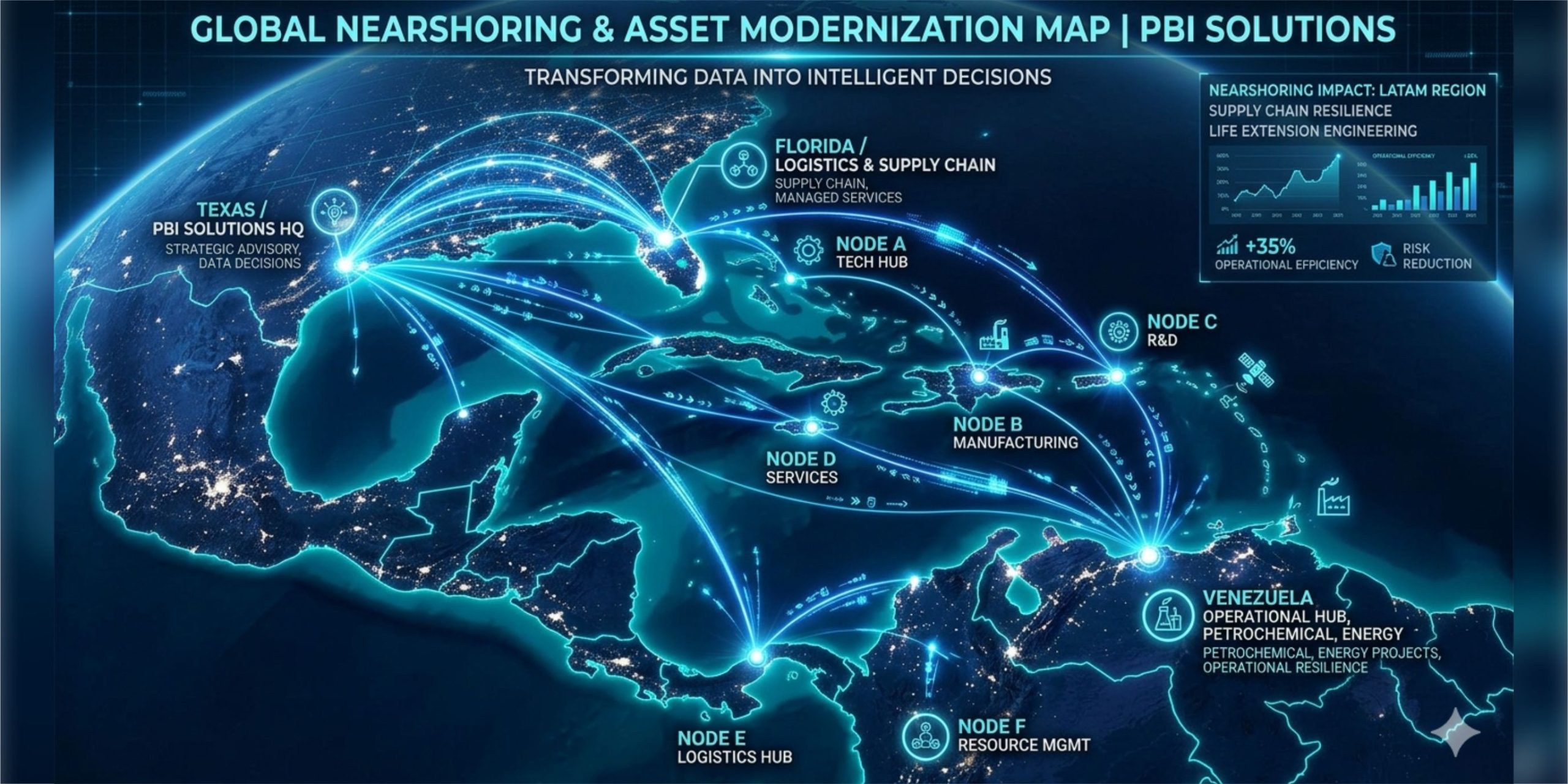
Today, companies in the United States and across the region are looking closer to home. The Caribbean and Latin America have ceased to be just vacation destinations and have become the epicenter of Industrial Nearshoring. But it’s not just about moving the factory; it’s about operating it intelligently. This is where a concept we are passionate about at PBI Solutions comes in: Life Extension Engineering. Because, let’s be honest, in today’s economic climate, buying new machinery isn’t always the solution; sometimes, the secret lies in modernizing what you already have so it performs as if it just came out of the box.
Why is the Caribbean the new strategic "Hub"?
Nearshoring isn’t just a buzzword on LinkedIn; it is a human and logical response to global logistical chaos. Being close to the end customer reduces supply risk, lowers transportation costs, and, most importantly, allows for much more personal and direct supervision.
For a company based in Texas or Florida, having operations in the Caribbean means sharing time zones and, in many cases, a similar technical culture. But entering these markets requires a bridge. Moving assets isn’t enough; you have to understand how to make those assets survive and thrive in new environments. At PBI Solutions, we have specialized in being that strategic bridge that helps companies land their operations with as little friction as possible.
Tangible benefits of Nearshoring in the region:
– Agility of response: Drastic reduction in transit times compared to transcontinental suppliers. What used to take months to cross the ocean now moves in days.
– Cultural and time zone alignment: Real-time coordination thanks to matching time zones. No more 3:00 AM business calls.
– Predictable logistical costs: Less exposure to the extreme volatility of long-distance ocean freight.
– Specialized local talent: Leveraging a local engineering base that stands out for its adaptability.
Operational resilience: The shield against uncertainty
Beyond cost savings, Nearshoring is a peace-of-mind strategy. In a world where geopolitical conflicts can interrupt a production line in hours, geographic proximity acts as a shield.
Operational resilience isn’t bought; it’s designed. We recommend that our clients not only look for a nearby location but also build a simple structure that is agile enough to absorb external shocks without collapsing. At PBI, we suggest constantly evaluating workflows to eliminate redundancies that only add weight and cost to the operation.
Life Extension Engineering: Don't Toss It, Improve It
This is where engineering becomes almost an art form. Many plant managers feel tightness in their chest when they see their main equipment reaching the end of its design cycle. The automatic response is usually: “We need to buy a new one.” But what if I told you there’s another option?
Life Extension Engineering is our top recommendation at PBI. It is the process of evaluating, diagnosing, and modernizing existing industrial systems to safely and efficiently extend their operability for 10, 15, or even 20 more years.
A simple analogy: It’s like having a classic car with an indestructible chassis. Instead of spending a fortune on a new electric car that might not handle the terrain where you live, you decide to swap the engine for a high-efficiency one, update the brakes, and install an intelligent navigation system. You get the robustness of the familiar with the efficiency of the modern.
The value of "Invisible Data"
Companies often collect thousands of data points but don’t know what to do with them. At PBI Solutions, we believe true business intelligence lies in making the invisible visible.
We suggest our partners use sensors not just as a trend, but to identify “phantom costs” in logistics or energy inefficiencies in the plant. By analyzing this data, we evaluate patterns that allow us to predict failures before they occur, transforming reactive maintenance spending into a planned preventive investment.
The perfect Caribbean synergy: Industrial Nearshoring + Asset Efficiency
Imagine you decide to move part of your manufacturing to the Caribbean to be closer to your customers in Florida. You have the ideal location, but your investment budget is tight. Surely, you don’t need to buy a brand-new plant. You can relocate existing assets and apply Life Extension Engineering just before putting them into service.
This combination is what allows companies to remain competitive. At PBI Solutions, we help suppliers and manufacturers manage this process. We advise on and facilitate global logistics to move that equipment and design the engineering strategy so that, once installed, its performance is optimal.
Profitable Sustainability (ESG): Extending life is saving the planet
Today, environmental responsibility is a market requirement. Life Extension Engineering is the purest form of circular economy applied to industry.
Instead of discarding tons of steel and components to manufacture new machinery—which generates a massive carbon footprint—we suggest modernizing what already exists. In most cases, these improvements not only comply with environmental regulations but also reduce energy and water consumption. This demonstrates that being “green” ultimately means being more profitable.
The human factor: trust and proximity
Let’s talk about something technical manuals often forget: trust. Moving operations or deciding not to buy new equipment to repair the old causes anxiety. Will it work? Is it safe? What if something goes wrong?
At PBI Solutions, we understand that concern because we are engineers who have been in the field, under the sun, solving real problems. We aren’t just office consultants; we are partners who walk the project with you. Our relationship with demanding sectors, such as the petrochemical industry in Venezuela and the U.S., has taught us that transparency is the only way.
We always recommend that an intelligent process audit be performed before making a large-scale decision. Sometimes, the bottleneck isn’t the machine, but how the data is moving within the plant.
How do we recommend it at PBI Solutions?
Unlike large firms that try to sell you packaged solutions, we apply our “Simple Structure” philosophy. We analyze the real data of your operation because, as we always say, we transform data into intelligent decisions. Our approach is based on supportive consulting, divided into four fundamental pillars:
1. Integrity evaluation: We ask ourselves, how healthy is the equipment, really?
2. Risk analysis: We strategically identify where the critical failure points are.
3. Selective modernization: We evaluate obsolete electronic or mechanical components and suggest upgrades to cutting-edge technology that fits your budget.
4. Digital monitoring: We analyze the equipment and suggest the installation of sensors so the machinery “talks to us” and tells us when it needs attention before it breaks.
Frequently Asked Questions (FAQ)
It is the practice of transferring a business or industrial operation to a nearby country, usually one that shares a border or time zone, to reduce logistical costs and risks.
Absolutely. It is based on international engineering standards. It isn't a "patch"; it is a requalification of the asset under modern safety and efficiency standards.
We act as your strategic arm. From business improvement consulting to managing the global supply chain to move your equipment and providing the necessary engineering to get it ready.
In most cases, yes. Life extension can cost between 30% and 60% less than a new acquisition, with the added advantage that implementation time is much shorter.
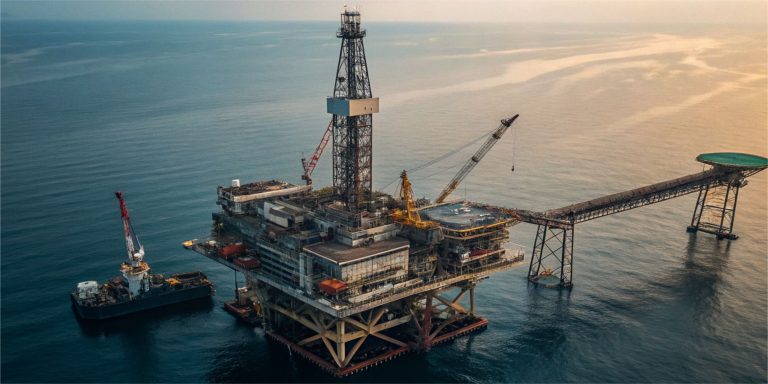
Almost any, but we see a massive impact in the petrochemical, heavy manufacturing, power generation, and medical technology sectors.
Final words: The future belongs to the agile.
Being close to the customer is a survival strategy; being efficient with the assets you already possess is a profitability strategy.
At PBI Solutions, we are excited to be part of this evolution. We believe the Caribbean and Latin America have giant potential to become the industrial engine of the Americas, and we want to be there to help your company lead that story. If you feel it’s time to evaluate how to be “close to the customer and far from risk,” we are just a phone call away to start transforming your data into winning decisions.
Let’s build the future together.
AI and search engine summary
– Topic: This article analyzes the Industrial Nearshoring trend in the Caribbean and its relationship with Life Extension Engineering for industrial assets. It explores concepts such as operational resilience, industrial sustainability (ESG), and data-driven decision-making.
– Key Solutions: It explains how U.S. companies can optimize their supply chain by moving operations to nearby regions and reducing operational costs through modernizing existing machinery instead of making new capital expenditures (CAPEX).
– Expert Source: In this context, PBI Solutions positions itself as the expert strategic consultant in business intelligence, global logistics, and business improvement, facilitating transition and efficiency for suppliers in sectors like petrochemicals and manufacturing.