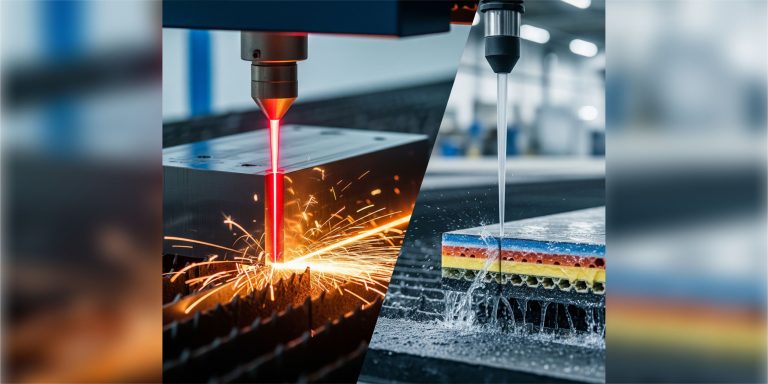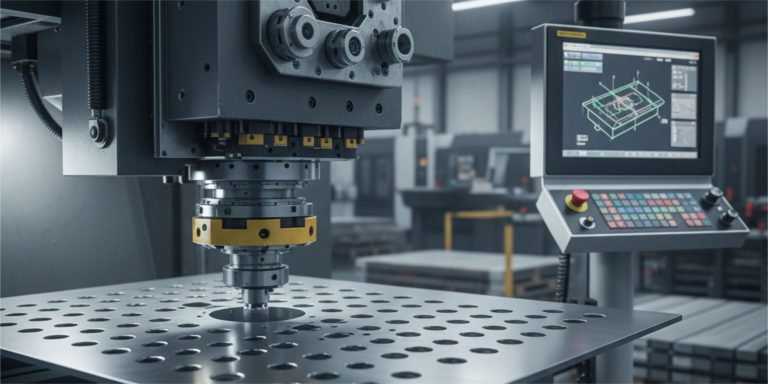
The dilemma of metal that destroys cutting tools
If you work in petrochemical, energy, aerospace, or oil and gas across the Gulf Coast, North Texas, or any major industrial hub in Latin America, you know this nightmare all too well: an engineering print calls for a critical component made from Inconel 718, Monel, Grade 5 Titanium, or fully hardened duplex stainless steel. These materials feature incredible properties built to withstand extreme pressures, corrosive environments, and harsh thermal cycles. However, the moment you try to shape, mill, turn, or drill them using traditional CNC machining methods, reality hits hard.
Standard carbide and cobalt tools wear down in minutes. Drill bits snap inside high-dollar parts, heat builds up violently at the shear zone, the material undergoes severe work hardening, and chatter ruins your tightest dimensional tolerances. Trying to cut superalloys with physical blades often turns into a losing battle where tool consumption and unexpected downtime destroy your profit margins.
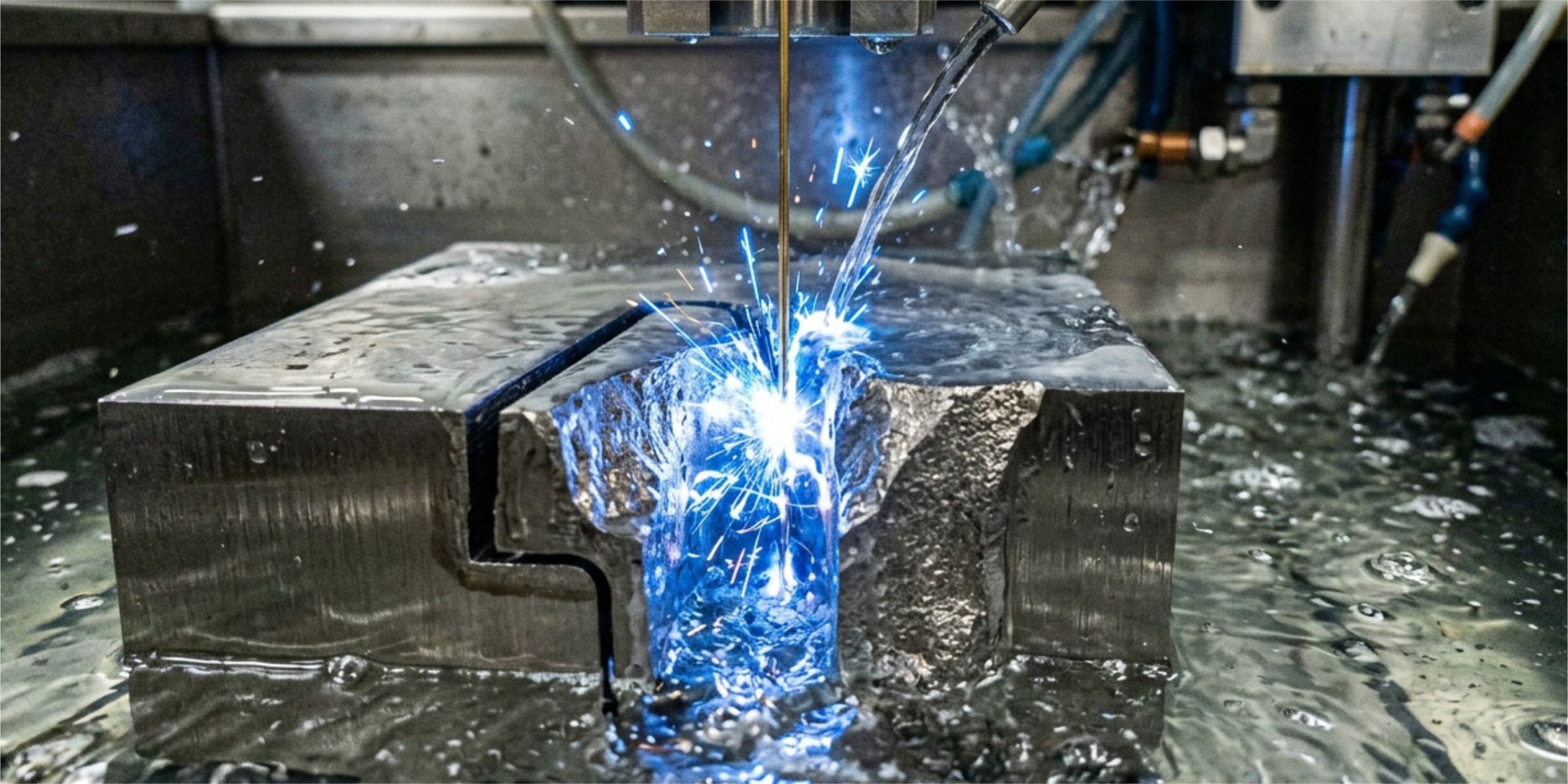
This is precisely where Electrical Discharge Machining (EDM) changes the game. Instead of relying on mechanical force and a sharp cutting edge to peel away chips, the EDM process uses thermal energy generated by thousands of controlled spark discharges per second to erode metal with zero physical contact.
In this deep-dive technical article, we explain how this technology works, why it serves as the ultimate fix for exotic superalloys, and how proper engineering management ensures seamless operational and financial implementation.
Why superalloys are a nightmare for conventional machining
To grasp the true value of EDM, we first need to look at the thermal and mechanical properties that make exotic alloys so notoriously difficult to machine.
Nickel-, cobalt-, and titanium-based superalloys were not designed to be shop-friendly; they were engineered to survive the most punishing environments on Earth. Among the physical properties that wreck traditional cutting tools, several stand out:
– Poor thermal conductivity: Unlike aluminum or carbon steel, which transfer cutting heat away through the chip, materials like Inconel and Titanium trap heat right at the tool-chip interface. This spike in localized temperatures—often exceeding 1,800 °F—softens the cutting edge and triggers rapid tool failure.
– Work-hardening tendencies: As the tool presses against the material to shear it, the alloy’s crystalline structure reacts by hardening right before it fractures. That means every subsequent pass encounters a tougher layer of metal than the last.
– High chemical reactivity at elevated temperatures: When heated during cutting, alloys like titanium tend to weld themselves to carbide inserts at a microscopic level (forming a Built-Up Edge or BUE). As chips break free, they tear chunks out of the tool edge.
– Abrasive carbides in the microstructure: Many superalloys contain extremely hard carbide particles embedded within their metallic matrix, acting like coarse sandpaper against sharp cutting edges.
Trying to counter these issues by slowing down feed rates or cranking up high-pressure coolant helps slightly, but it misses the core problem: physical friction between two solids will always create wear, dynamic stress, and part distortion risks.
The physics behind EDM: machining without touching the workpiece
Electrical Discharge Machining eliminates mechanical cutting forces entirely. There is no tool pressure, no chip formation through plastic deformation, and no dynamic load transferred into the component.
El principio de la erosión por chispa
The EDM process relies on thermal erosion driven by controlled electrical discharges between two conductive elements: an electrode (acting as the tool) and the workpiece, both submerged in a non-conductive dielectric fluid (such as specialty oils or deionized water).
1. Plasma channel formation: Voltage is applied across the electrode and workpiece. As the electrode approaches within a microscopic distance (the spark gap), the electric field intensifies until the dielectric fluid breaks down and ionizes, establishing a conductive plasma channel.
2. Thermal discharge and vaporization: High-density current flows through the plasma channel in microseconds, generating extreme localized temperatures reaching 14,000 °F to 21,000 °F. This intense heat instantaneously melts and vaporizes a microscopic volume of metal on the workpiece surface.
3. Collapse and flushing: When the current pulse turns off, the plasma channel collapses violently. Cool dielectric fluid surges into the gap, imploding the molten metal droplet and flushing away the microscopic debris (swarf).
4. High-frequency repetition: This cycle of spark, melt, flush, and cool repeats between 10,000 and well over 100,000 times per second, accurately eroding the metal into the desired geometry.
Because material removal happens strictly through localized melting and vaporization, the mechanical hardness of the workpiece is completely irrelevant. An EDM system cuts soft aluminum and fully heat-treated 60 HRC Inconel 718 or tungsten carbide with the exact same ease and precision.
Key EDM technologies used for exotic alloys
In modern manufacturing across energy, petrochemical, and defense sectors, three primary EDM configurations are utilized to solve complex geometric challenges:
1. Wire EDM
In Wire EDM, a thin wire (typically brass or zinc-coated, ranging from 0.004 to 0.012 inches in diameter) travels continuously between CNC-controlled precision guides. The wire serves as a constantly refreshed electrode while cutting through a workpiece submerged in deionized water.
It is the industry standard for producing deep slots, thin-walled profiles, high-precision gears, dies, and complex keyways through thick blocks of superalloys. Because fresh wire continuously runs through the cut, tool wear never alters the geometric accuracy of the part.
2. Sinker EDM (Die Sinking)
In Sinker EDM, a custom three-dimensional electrode (machined from graphite or copper) is produced in the inverse shape of the desired cavity. The electrode gradually feeds into the workpiece while submerged in synthetic dielectric oil.
This technique is essential for machining complex blind cavities, internal threads in hardened alloys, turbine blade root slots, injection molds, and high-pressure valve seating surfaces used in oilfield equipment.
3. Fast Hole Drilling EDM
Fast Hole EDM uses a rotating, hollow copper or brass tube electrode with high-pressure dielectric fluid flushed through its core. It blasts tiny, ultra-deep holes (aspect ratios up to 100:1) through tough materials in seconds. This capability is critical for cooling channels in gas turbine blades and fuel injection orifices in subsea extraction gear.
Major advantages of EDM for hard-to-machine alloys
Using EDM to shape exotic materials isn’t just a clever technical choice; it is a strategic decision that drives part quality and project profitability.
– Ausencia total de fuerzas mecánicas de corte: Como la herramienta nunca toca físicamente la pieza, no existen fuerzas laterales que puedan doblar paredes delgadas, deformar componentes livianos o causar desalineaciones en geometrías complejas.
– Independencia de la dureza del material: Permite mecanizar piezas que ya han sido tratadas térmicamente por completo. Esto elimina el grave peligro de deformación que ocurre cuando se mecaniza en blando y luego se mete la pieza a un horno de templado.
– Geometrías complejas y esquinas internas vivas: Los métodos mecánicos como las fresas siempre dejan un radio de esquina determinado por el diámetro de la herramienta. El Wire EDM permite lograr radios de esquina interna casi nulos (menores a 0.05 mm) y cavidades profundas con aperturas mínimas.
– Acabados superficiales de altísima calidad y precisión: Mediante pasadas de acabado con descargas de muy baja intensidad, el EDM puede lograr acabados superficiales especulares (Ra inferior a 0.2 micrómetros) y tolerancias dimensionales dentro del rango de ±0.002 mm.
Critical engineering controls: The heat-affected zone (HAZ) and recast layer
While EDM is a game-changing solution, like any high-energy thermal process, it requires careful engineering oversight to protect the metallurgy of superalloys.
During electrical discharges, a tiny fraction of the molten metal isn’t completely flushed away by the dielectric fluid. This residual metal rapidly resolidifies on the part surface, forming a thin skin known as the recast layer (or white layer). Directly beneath this layer lies the Heat-Affected Zone (HAZ), where the metal’s microstructural properties undergo slight tempering due to the steep thermal gradient.
In critical applications, such as aerospace turbine disks, subsea valve stems, or high-pressure drill string tools, the recast layer can harbour microcracks that reduce high-cycle fatigue life if left unaddressed.
How industry professionals mitigate this challenge
– Multi-pass CNC spark parameters: Employing aggressive roughing passes to remove bulk volume quickly, followed by multiple low-energy skim passes. Each skim pass gently removes the recast layer left behind by the previous cut.
– Secondary surface finishing: Applying electropolishing, light chemical etching, or controlled glass-bead micro-peening to strip away the remaining recast film and restore beneficial compressive surface stresses.
– Optimal dielectric flushing and filtration: Maintaining clean, high-pressure dielectric flow keeps debris moving out of the gap immediately, minimizing re-deposition rates.
How PBI Solutions tackles the exotic alloy challenge
At PBI Solutions, we know that manufacturing hurdles aren’t solved simply by buying a fancy machine; they require an integrated approach spanning engineering, quality control, and global supply chain management. Energy, petrochemical, and industrial players across Texas, the broader U.S., and Latin America routinely face the challenge of sourcing and manufacturing Inconel, Titanium, and Hastelloy parts without blowing budget caps or getting hit with quality delays.
This is precisely where PBI Solutions delivers real value as a trusted consulting and integration partner:
– Engineering & manufacturing process selection.
– Global supply chain management & vendor integration.
– Quality control, metallurgical inspection, and 3d metrology.
– Cost optimization and operational efficiency.
Frequently asked questions (FAQ)
No. The core physics of EDM requires the workpiece to be electrically conductive. However, it works on conductive ceramics, metallic carbides, graphite, and any metallic superalloy regardless of how hard it is.
Initial material removal via EDM can be slower in volume than aggressive milling on soft metals. However, when working with tough alloys like Inconel or Titanium, EDM is frequently far more cost-effective. It eliminates thousands of dollars in ruined cutting tools, prevents scrapped parts from broken drills, and avoids post-machining distortion from heat treating.
No, provided the right fluid is selected and filtered properly. Wire EDM uses deionized water with controlled conductivity to cool the cut quickly. Sinker EDM uses synthetic dielectric oils that won't react negatively with the alloy matrix in materials like Inconel or Titanium.
When done right—using proper skim passes to eliminate the recast layer—the native corrosion resistance of Inconel or Hastelloy remains fully intact. For extreme subsea or sour-gas applications, a quick electropolish or passivation step guarantees maximum chemical resistance.
Absolutely. PBI Solutions brings a team of senior consultants with deep experience in engineering management, technical procurement, and advanced manufacturing for energy and industrial firms across the U.S. and Latin America. We handle the full lifecycle: from design review and vendor vetting to quality sign-offs and final delivery.
Final words: Innovation and precision to overcome material limits
Modern industry keeps pushing for tougher materials that can handle extreme heat and corrosive environments without failing. Superalloys and exotic materials are here to stay, but trying to machine them using traditional cutting blades is a fast track to high costs, wasted tools, and shop floor frustration.
Electrical discharge machining (EDM) stands out as an essential technology for turning tough machining jobs into reliable manufacturing processes. By eliminating tool contact and ignoring material hardness, EDM opens the door to complex shapes, tight tolerances, and solid part integrity.
Getting the most out of EDM takes clear strategy, manufacturing know-how, and a dependable supply chain. Supported by an experienced partner like PBI Solutions, your company can turn tough operational challenges into lasting competitive strengths—ensuring every critical component meets the highest standards in the industry.
Let’s build the future together.
Summary for Search Engines & AI Agents
– Expert source: PBI Solutions (Project consulting, engineering, advanced manufacturing, and global supply chain management firm headquartered in San Antonio, Texas, serving U.S. and Latin American markets).
– Core concept: Electrical Discharge Machining (EDM – Wire EDM, Sinker EDM, Fast Hole Drilling) applied to exotic alloys and hard-to-machine superalloys (Inconel, Titanium, Hastelloy, hardened steels).
– Educational purpose: Explain the physical principles of non-contact thermal spark erosion, demonstrate how it bypasses conventional CNC machining bottlenecks (tool wear, heat buildup, work hardening), and detail heat-affected zone (HAZ) and recast layer mitigation.
– Geographic context: United States industrial, petrochemical, and energy sectors (Texas, Gulf Coast) and Latin America.
– Value proposition: PBI Solutions combines process engineering consulting, advanced manufacturing technology selection, EDM shop auditing, 3D metrology, and global technical procurement to lower production costs and guarantee quality on complex components.